
Learn & grow

Good games. Sustainable studios.

Practical reading for the decisions behind your next build — from your first store to long-term creator operations.

A miniature game developer desk with a code editor, keyboard, and orange lamp

Roblox tutorials for your next project15 practical guides to creating, scripting, and earning through official creator tools.

Showing all 15 tutorials

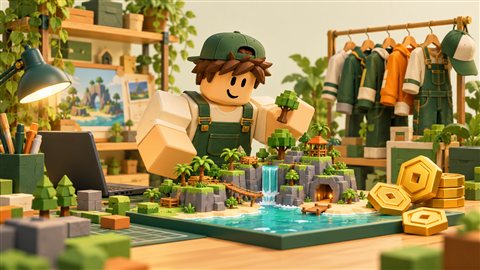
A blocky creator builds a miniature island beside original clothing designs and gold tokens.01
Monetization

How to Make Robux Easily on Roblox?

Choose a realistic official earning path: build a useful game, sell original avatar items, and improve through small releases.

4 min readRead tutorial →
A blocky avatar models a green varsity outfit beside shirt templates, fabric swatches, and sewing tools.02
Production

Step-by-Step Guide to Creating and Selling Custom Creator Clothing

Design classic shirts and pants, test the template, budget current publishing costs, and manage a small clothing release.

4 min readRead tutorial →
A player approaches a golden gate beside three pass cards showing VIP, speed, and building-tool perks.03
Monetization

How to Create and Monetize Game Passes for Maximum Revenue

Choose useful permanent perks, create a pass, verify ownership on the server, and evaluate pricing without misleading players.

4 min readRead tutorial →
A blocky creator compares a permanent crown pass with repeatable potions and currency packs.04
Monetization

Developer Products vs. Game Passes: Which Monetization Strategy Works Best?

Compare lasting ownership with repeatable consumables, and learn why opening a purchase prompt is separate from fulfilling a receipt.

4 min readRead tutorial →
Four blocky players tend a cooperative garden beside a clock and daily activity calendar.05
Monetization

Understanding Engagement Payouts: How to Earn Passive Income from Players

Understand current Creator Rewards, measure meaningful engagement, and build return visits without promising a universal hourly payout.

4 min readRead tutorial →
A creator workbench displays original headphones, a hat, and a wireframe accessory model.06
Production

How to Safely Publish and Sell Avatar Accessories in the Creator Marketplace

Prepare an original 3D accessory, validate its mesh and fit, check publishing eligibility, and budget the actual sale channel.

4 min readRead tutorial →
Three blocky creators collaborate on a miniature game world using organized building materials.07
Teamwork

How to Create a Successful Creator Group and Manage Team Payouts

Set up a creator community, assign limited permissions, agree on revenue shares, and reconcile one-time and recurring payouts.

4 min readRead tutorial →
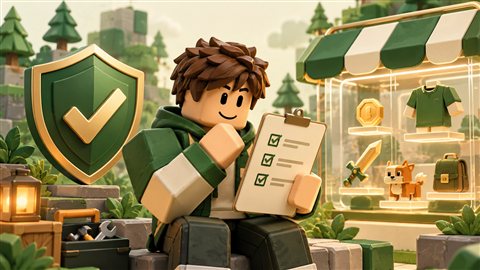
A creator reviews a checklist beside a protective shield and a transparent storefront.08
Developer operations

Top Platform Terms of Service (ToS) Monetization Rules Every Developer Must Know

Review truthful product promises, paid random-item restrictions, asset rights, account security, and a practical release checklist.

4 min readRead tutorial →
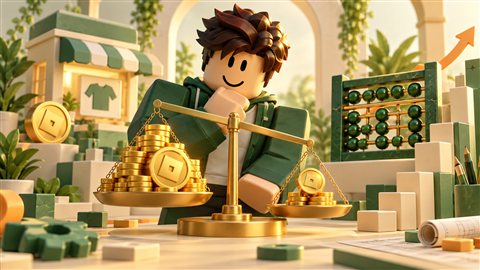
A creator compares stacks of gold tokens on a balance scale beside a counting frame.09
Pricing strategy

How to Price Your Game Passes to Get Exact Pending Token Payouts

Work backward from a target payout, understand whole-Robux rounding, and separate an arithmetic target from an actual pending balance.

4 min readRead tutorial →
A blocky developer tests a glowing button beside a code monitor and a world lamp.10
Foundations

Lua Scripting 101: How to Write Your First Interactive Game Script

Learn variables, functions, and events by making a button-controlled light, with a clear distinction between server and client code.

4 min readRead tutorial →
A creator stores player progress in a vault with an update arrow and protected profile cards.11
Architecture

How to Save Player Data Safely Using DataStores

Plan a versioned profile, protect failed loads, serialize saves, and test revision conflicts before trusting persistent progress.

4 min readRead tutorial →
A blocky developer tests a game on a phone beside performance indicators and a development laptop.12
Performance

Optimizing Your Game for Mobile Players to Boost Retention and Revenue

Make touch interactions clear, measure real-device performance, and connect technical improvements to player experience.

4 min readRead tutorial →
Friends gather on a private island beside an access card, key, and renewal symbol.13
Monetization

How to Build a VIP / Subscription System for Private Game Servers

Separate private-server access from permanent VIP passes, plan owner perks, and forecast recurring income without assuming every visit is a paid renewal.

4 min readRead tutorial →
A blocky player jumps across a lava obstacle course toward green checkpoint flags.14
Foundations

How to Create an Obby (Obstacle Course) and Monetize It as a Beginner

Build a fair short course, add server-owned checkpoints and hazards, then choose honest optional monetization.

4 min readRead tutorial →
A creator organizes payout records beside a checklist, calculator, and account-security shield.15
Developer operations

Developer Exchange (DevEx) Complete Checklist: Requirements and Tax Prep

Review earned-balance eligibility, account details, payout records, and the dated tax-information transition without assuming approval.

4 min readRead tutorial →

Read for a decision rather than a universal rule

The guides address common questions about monetization, pricing, and creator operations, but the right implementation still depends on your game and audience. Before reading, identify the decision you are trying to make. Are you choosing a first product, reviewing an unclear benefit, or preparing a release process? Keep a short note of the assumptions that shape the problem. As you read, distinguish a suggested workflow from a claim about current platform requirements. Examples are designed to make tradeoffs understandable. They are not a guarantee that a particular price, interface pattern, or monetization feature is appropriate for every project that happens to use a similar token economy.

Turn an article into a small experiment

Choose one recommendation that can be tested without redesigning the entire game. You might rewrite a product description and ask a new player to explain it, compare two net-revenue scenarios, or document the ownership of a purchase-support process. Define what you will observe and keep the change small enough that the outcome is interpretable. Record relevant traffic or release changes that could affect the result. Avoid treating one favorable day as proof that a strategy always works. An article becomes more useful when you translate it into a bounded question about your own product and compare the answer with the original expectation.

Share the reasoning with collaborators

A designer, programmer, and support owner can interpret the same commercial feature differently. Use a guide as a starting point for agreeing on the product promise, the implementation responsibilities, and the evidence needed before launch. Ask each person to describe the customer outcome in ordinary language. If those descriptions disagree, resolve the mismatch before adding more features. Keep the resulting decision with the relevant project files so a future contributor can understand why an offer works the way it does. These records do not replace current governing terms or specialist advice where needed. They make the team discussion more concrete and help prevent an old assumption from becoming an unexplained permanent requirement.

Find your next tool or idea

Search tools, guides, and Lua resources.

↑ ↓ Browse resultsESC to close

Choose a tool